The Australian Aboriginal flag is an official flag of Australia, representing the Aboriginal people of Australia.
An Official Flag of Australia
In 1995, the Australian Government officially recognised the Aboriginal flag as a “Flag of Australia” under the Flags Act 1953, alongside the Torres Strait Islander flag.
The Aboriginal flag has become a powerful symbol of Aboriginal identity, unity, and the ongoing struggle for reconciliation and land rights, and connection to the land. It is flown during NAIDOC week (NAIDOC: National Aborigines and Islanders Day Observance Committee), National Reconciliation Week, and at various cultural and political events.
Aboriginal Flag Day is July 9
The Australian Aboriginal Flag was first flown on July 9, 1971, in Victoria Square, Adelaide, during a land rights rally. This day coincided with National Aborigine’s Day, which has since evolved into NAIDOC Week.
Aboriginal Flag Meaning
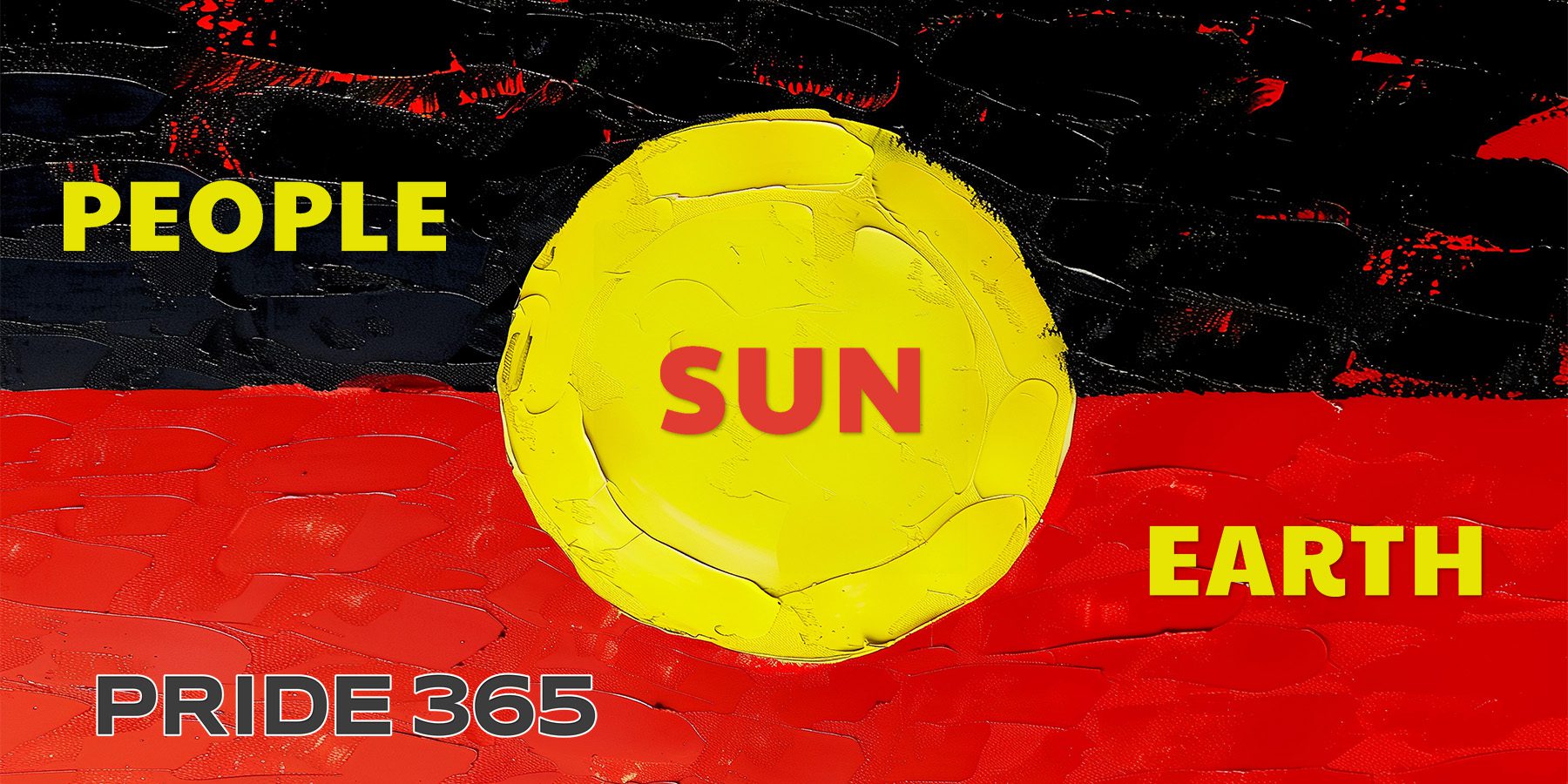
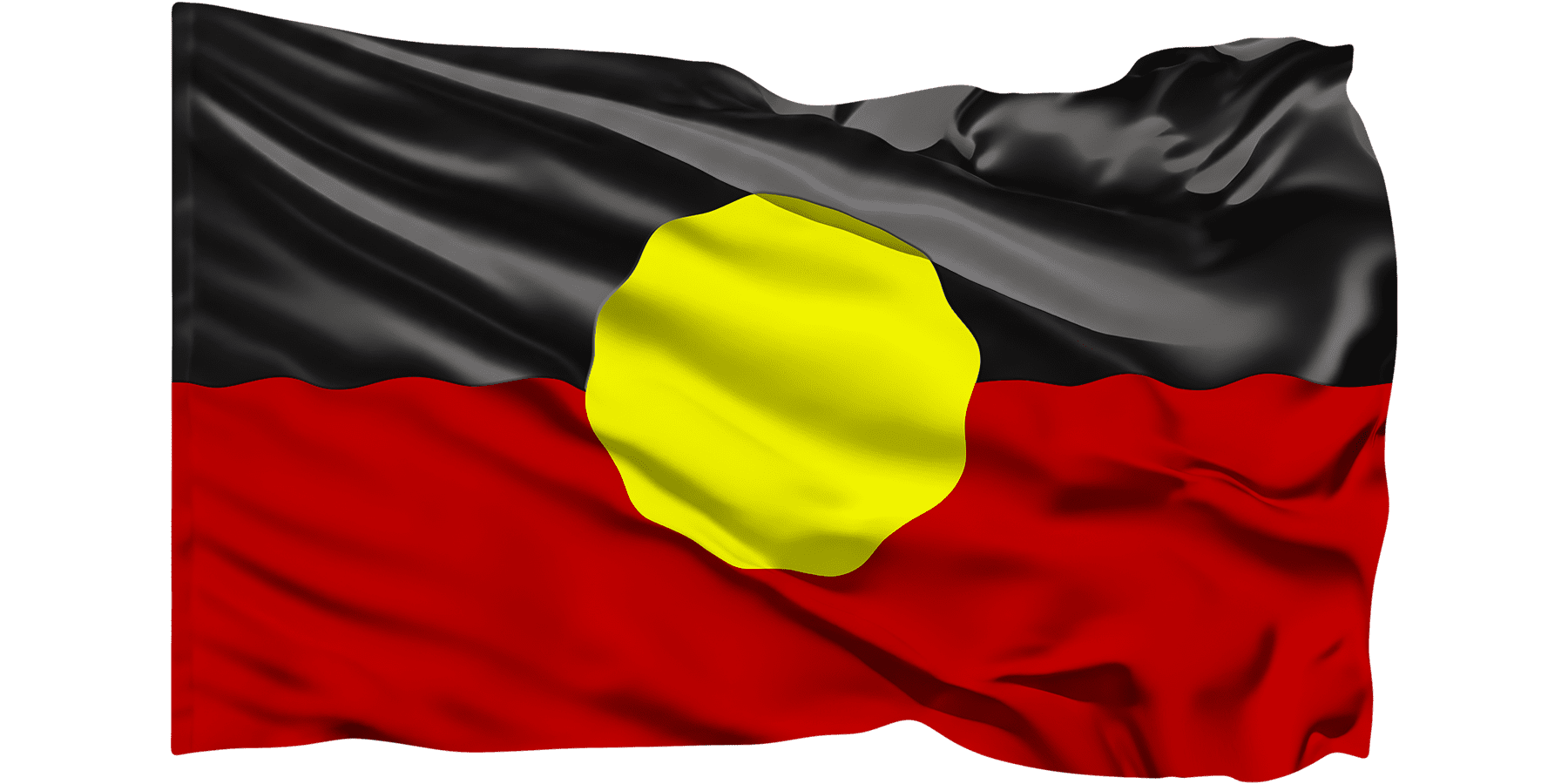
- The top half of the flag is black to symbolise Indigenous people
- The red in the lower half depicts the earth and spiritual connection to the land, as well as the colour of ochre, which has ceremonial significance
- The circle of yellow in the centre of the flag represents the sun, the giver of life
Aboriginal Flag Design
Dr. Harold Thomas (also known as Bundoo) is an Aboriginal Australian Master Modern Artist and former activist. In 1971, Dr. Thomas created a bold graphic artwork that was immediately adopted for the Australian Aboriginal flag.
Dr. Thomas is a Luritja man born in 1947 in Alice Springs, NT, and incorporated his experiences as an art student and his connection to Aboriginal culture and the land in the design of the flag.
The flag is horizontally and equally divided into a black and red regions with a superimposed yellow disc over the centre of the flag. The original design of the flag is a 2:3 proportion.
- Red: #E03C31 | Pantone® 179 C
- Yellow: #FFC72C | Pantone® 123 C

Author: Find Pride
Pride is our journey. Find Pride is your trusted resource for LGBTQ+ friendly local business, queer news, inclusive travel and events. This is community. Find and support your local Australian queer and ally businesses. Est 2021 #FindPride #Australia #Pride365